
 nongthuy032005@gmail.com
 DI SẢN VĂN HÓA PHI VẬT THỂ QUỐC GIA


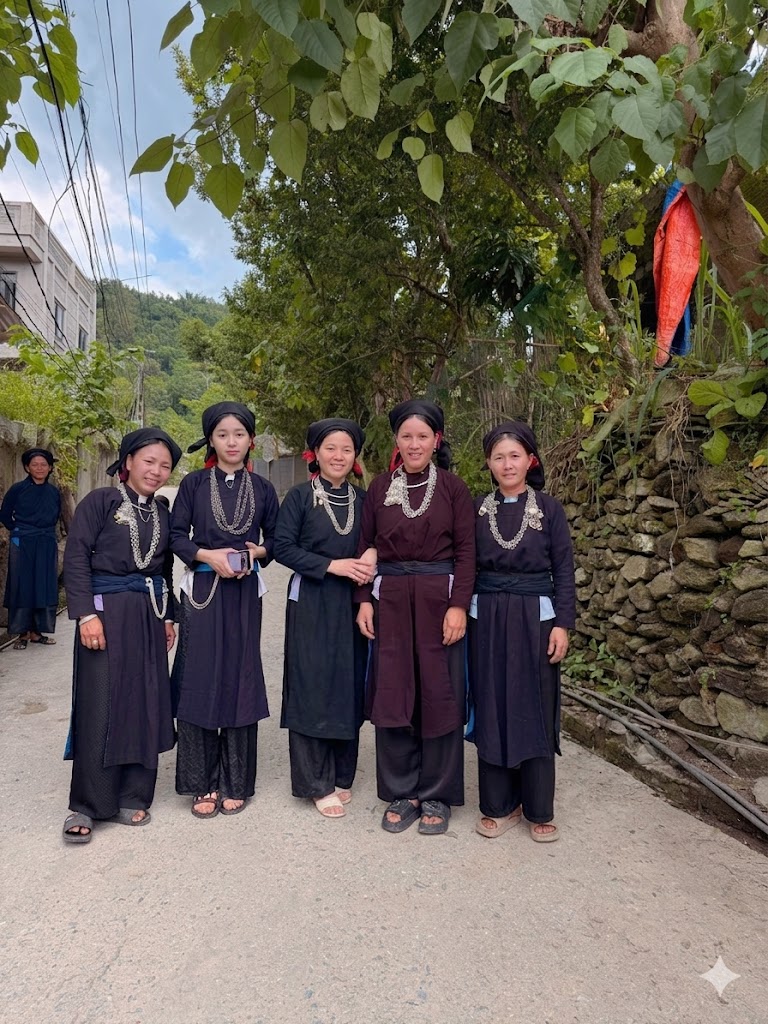
Ngoài tiếng nói, nhìn hình vẻ bên ngoài, các dân tộc thường dễ dàng phân biệt với nhau bằng quần áo và cách phục sức. Y phục có thể coi là một trong những biểu hiện nổi bật của những đặc trưng văn hóa vật chất của tộc người. Đến các phiên chợ vùng cao biên giới đông vui như chợ Nàn Xin, chợ Cốc Pài, chợ
Bản Máy, chợ Hoàng Su Phì, như thường lệ vẫn họp vào những ngày chủ nhật, có thể gặp mặt đủ các dân tộc trong vùng. Mỗi dân tộc một kiểu áo, kiểu quần, kiểu váy, kiểu khăn. Các dân tộc đều có cách để tóc, cuốn khăn riêng. Để răng trắng, nhuộm răng đen hay bịt răng vàng vừa là thị hiếu vừa là một thành tố trong tổng thể văn hóa tộc người. Mỗi dân tộc lại một sắc màu. Màu sắc không phải chỉ phân biệt với nhau ở màu nâu hay màu chàm, màu đỏ hay màu trắng, mà ngay giữa màu chàm chẳng hạn đã có bao nhiều gam độ khác nhau. Màu chàm được nhuộm hoàn toàn bằng cao chàm với độ đậm nhạt không giống nhau. Màu chàm của những bộ quần áo tuy cũ nhưng luôn luôn được nhuộm lại mới như của người Hà Nhì. Mẫu chàm của những bộ quần áo được nhuộm chàm pha lẫn màu nâu.
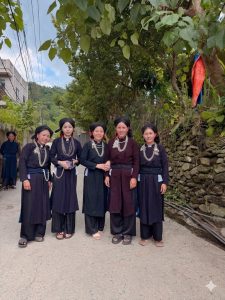
Hình 1: Trang phục người phụ nữ
Đó là màu của bộ y phục La Chí, không khó gì phân biệt trong rừng màu sắc ngày chợ.
So với nhiều dân tộc khác, trang phục của người La Chí đơn giản, không cầu kì. Tiếng La Chí Pu là áo, cũng giống như người Cao Lan gọi chiếc áo đài là Pu dăn dinh. Đây là từ vị gốc ngôn ngữ Tày – Thái. Đàn ông mặc áo dài tới bắp chân. Áo năm thân tay dài, cài khuy bên nách phải và có một đường chỉ màu thêu trên hô áo. Vạt áo phía trong ngắn chỉ đến ngang ngực. Áo dài là chiếc áo cổ truyền. Từ chiếc áo này, ngày nay người ta đã cải tiến, cắt ngắn vạt áo thành chiếc áo chỉ ngắn tới đùi. Nam giới, nhất là lớp thanh niên, những giáo viên, cán bộ xã người La Chí thường thích mặc loại áo ngắn này. Nam giới vẫn mặc quần lá tọa, ông rộng (khoảng 30 – 35cm). Một hiện tượng lí thú là tiếng La Chí gọi quần là quen hay quanh, cũng như tiếng Pu Péo là quân, đều có nguồn gốc với từ quần của tiếng Việt. Đó là sự trùng hợp do nguồn gốc hay giao lưu văn hóa? Đàn ông để tóc dài quá vai. Họ thường đội khăn cuốn hay khăn xếp để giữ tóc. Mũ ít được sử dụng. Chiếc túi vải chàm có viền vải đỏ ở xung quanh, trừ nắp túi (có kích thước 27 x 22cm) để đựng diêm thuốc và các đồ lặt vặt khác luôn đeo bên mình. Cách phục sức của đàn ông với chiếc áo dài, khăn cuốn, chiếc áo với từ gốc Tày, chiếc quản với từ gốc Việt lại gọi cho chúng ta hình ảnh của bộ y phục nam giới người Việt, người Tày trước đây. Một thời nam giới Việt, Tày, La Chí ăn mặc rất giống nhau.
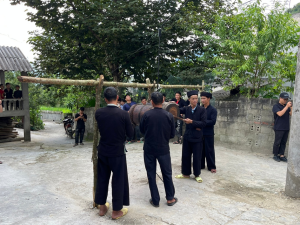
Hình 2: Trang phục truyền thống của Nam và Nữ
Phụ nữ La Chí mặc quần, có một số ít mặc váy như người Tày. Có thể, cũng theo quy luật chung về sự phát triển nữ phục ở người Việt, người Tày, quá trình biến động về nữ phục của người La Chí là quá trình chuyển biến từ váy sang quần. Nếu như ở người Việt quá trình này diễn ra khoảng thế kỉ XVIII – XIX, thì ở người Tày, người La Chí nó diễn ra chậm hơn, có đến một trăm năm. Chính vì vậy một số ít người mặc váy là còn giữ lại được một truyền thống xưa. Một tập quán mới, một thói quen mới – người phụ nữ mặc quần – đã phổ biến, mà có lẽ đã trải qua một quá trình lâu dài.
Trong bộ y phục của người La Chí nổi bật lên là chiếc áo dài của phụ nữ. Đó là chiếc áo pu tứ thân, xẻ bị giữa, không có khuy cài. Khi mặc, vạt áo bên trái có nẹp vài màu sẽ vặt ngang sang bên phải. Chiếc thắt lưng vải thay chức năng của hàng khuy bạc. Cổ áo khâu bằng vài màu được thêu thùa cẩn thận. Vào dịp tết, ngày lễ, người ta còn diện 3 chiếc áo dài lồng vào nhau. Chiếc áo này có kiểu cắt may giống áo pu dăng dinh của người Cao Lan – Sán Chỉ và phẳng phất đường nét chiếc áo của phụ nữ Việt mặc ở kinh đô thủa trước.
Đi kèm với kiểu áo dài, tứ thân, xẻ giữa, không khuy, dùng thắt lưng để khép vạt áo, có thể là chiếc áo cánh mặc ở trong như người Thái, hay là dải yếm như người Việt, người Mường, người Cao Lan – Sán Chi, người La Chí. Áo dài xẻ ngực tới dải yếm trở thành một bộ y phục thống nhất. Bởi vì chẳng ai lại mặc yếm trong chiếc áo cài khuy bên nách hay cài cúc giữa.
Chiếc yếm rua nhúm của người La Chí là một mảnh vải vuông (rộng khoảng 37 – 40cm). Đầu yếm là 1 góc vuông xẻ cổ, có 2 dây để khi mặc buộc ra sau gáy và 2 dây ở hai góc bên để buộc ra phía sau lưng như yếm người Việt, người Mường. Nếu như ở người Mường, chiếc yếm trắng không thêu thùa, chìm đi bởi dải hoa văn sặc sỡ trên cạp váy lấn át, thì chính chiếc yếm ở người La Chí lại là nơi tập trung hoa văn. Trang trí trên yếm quy tụ cả trên góc đầu yếm với những đường nẹp đó song song trên nền yếm trắng, 4 đường thêu dích dắc bằng chỉ màu song song và cắt nhau từng đôi một, hình hoa lá cách điệu. Những đường thêu trên yếm được lộ ra giữa 2 ve áo làm cho bộ y phục phụ nữ La Chí, tuy giản dị nhưng hài hòa, đẹp đẽ.
Phụ nữ La Chí không quen đội nón mà thường đội khăn. Nếu như phụ nữ Việt quen đội khăn vuông thì phụ nữ La Chí lại ưa dùng chiếc khăn dài. Kha la (khăn hóa) là loại khăn dài như kiểu khăn piêu của người Thái. Khăn dài tới 2,85m, rộng 0,33m. Hai đầu khăn có thêu những đường chỉ màu – trắng hay xanh và những hình hoa cách điệu – mỗi bông hoa là 4 tam giác và mỗi nửa tam giác lại được thêu bằng những loại chỉ màu khác nhau. Cách đội và thắt khăn khác với người Thái đội khăn piêu, chiếc khăn được thắt phía sau gáy, hai đầu khăn thêu hoa rủ xuống thắt lưng. Phụ nữ thích đeo vòng tai, vòng tay. Nam giới chỉ đeo vòng tay, không đeo vòng cổ như người H’ mông. Trẻ em cũng mặc như người lớn. Các trang phục như vậy rõ ràng không hợp với tuổi nhỏ. Với bộ y phục đó trông các em thường già đi trước tuổi.
Thầy cúng mỗi khi hành lễ đều có bộ lễ phục riêng, khác với y phục thường ngày. Đó là bộ quần áo thụng – dài quá mắt chân, xẻ giữa, có thắt dây lưng bằng vải. Mũ vải rộng, có quai mũ. Trong một số nghi lễ, như nghi lễ tra lúa nương, người hành lễ đội nón hoặc đeo một miếng da trâu khô (rộng 0,2 – 0,3cm) ở sau lưng… Nón và mũ không phải là những thành tổ trong bộ y phục cổ truyền của người La Chí. Trường hợp này cũng thấy lặp lại ở người Pu Péo, khi người thầy cúng tiến hành 1 số nghi lễ ở ngoài trời cũng đội nón và trên nón còn được gài một ngôi sao bằng tre có kích thước khoảng 6 – 7cm. Sự trùng hợp này hẳn nói lên một mối quan hệ trong lịch sử của người La Chí và người Pu Péo. Ăn trầu, nhuộm răng là phong tục phổ biến ở Đông Nam Á nói chung, ở người Việt và một số dân tộc ít người ở nước ta nói riêng. Ngày trước, để chống lại chính sách đồng hóa cưỡng bức của phong kiến Trung Hoa, tổ tiên ta đã kiên quyết bảo vệ những phong tục của mình với quyết tâm “đánh cho để dài tóc, đánh cho để đen răng…”. Thời đó răng đen là một trong những đặc điểm văn hóa phân biệt giữa hai nước, giữa hai nền văn hóa Nam – Bắc. Răng đen còn được giữ mãi ở miền xuôi cho đến vài chục năm gần đây. Cho đến nay, người La Chí vẫn giữ được răng đen như một phong tục với tính chất thẩm mĩ là chủ đạo.
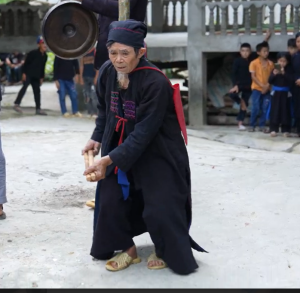
Hình 3: Trang phục của thầy cúng
Có nhiều cách nhuộm răng đen. Các dân tộc khác nhau đều tìm ra những chất liệu không giống nhau để nhuộm răng. Chẳng hạn, người Xinh Mun nhuộm răng bằng một loại lấy từ nhựa cây còn người La Chí thì nhuộm răng – Ton nhĩ, bằng lá cây. Trước tiên họ nhai nát vài ngọn lá nhấn tế (một loại dây leo như cây mơ lông) rồi ngậm một lúc. Một ngày làm như vậy hai ba lần răng sẽ ngả vàng. Sau đó lấy lá mía phe, có vị cay, đắng nhai kĩ rồi lại ngậm. Cứ ngậm như vậy nhiều lần răng sẽ đen. Hàng tuần người ta lại nhai hai loại lá trên một lần đề răng thêm đen. Một điều cần chú ý, trước khi nhuộm răng phải đánh răng cho thật sạch để chất nhuộm chóng bám vào răng và răng mới đen. Răng càng đen càng đẹp. Cũng như người Nùng, người Dao, nhưng ở mức độ ít phổ biến hơn, thanh niên La Chí cũng thích bịt răng vàng, coi đó là một hình thức làm duyên, làm dáng, một dấu hiệu của sự trưởng thành. Tục bịt răng vàng hay nhuộm răng đen trước kia phổ biến đến mức trở thành những tộc danh như người Hắc Xỉ (người Răng đen), người Kim Xi (người Răng vàng). Ngay Lê Quý Đôn, ở thế kỷ thứ XVIII cũng ghi chép về người Răng vàng ở Tuyên Quang. Tộc danh này rõ ràng là phiếm xưng, khó xác định được tộc thuộc cụ thể vì đó là phong tục chung, đặc trưng văn hóa chung của một số dân tộc ở miền núi miền Bắc. Người La Chí ở Bản Phùng, Nản Xin không có tục ăn trầu, còn ở Bản Pắng, Bản Díu, ăn trầu lại là một phong tục phổ biến.
Nguồn: Nguyễn Văn Huy. Văn hóa truyền thống của người La Chí. Hà Nội: Nhà xuất bản Hội Nhà văn.
In addition to language, ethnic groups can often be readily distinguished by their clothing and styles of personal adornment. Traditional attire is considered one of the most distinctive expressions of an ethnic group’s material culture. At the vibrant highland border markets, such as Nàn Xin Market, Cốc Pài Market, Bản Máy Market, and Hoàng Su Phì Market, which are traditionally held every Sunday, visitors can encounter representatives of nearly every ethnic community in the region. Each ethnic group is characterized by its own unique styles of shirts, trousers, skirts, and headscarves.
Ethnic groups also differ in their hairstyles and methods of wrapping headscarves. Practices such as keeping natural white teeth, blackening the teeth, or covering them with gold are not only matters of personal preference but also important elements of each group’s cultural identity. Every ethnic community is associated with its own distinctive color palette. The differences extend beyond the obvious contrasts between brown and indigo or red and white; even within the indigo spectrum, numerous shades can be observed. Indigo dye is produced entirely from natural indigo plants, resulting in varying degrees of intensity. For example, the indigo garments of the Hà Nhì people, although often worn for many years, are regularly re-dyed to maintain their deep, fresh color. In contrast, some indigo-dyed garments display a blend of indigo and brown tones, creating a distinct visual appearance.
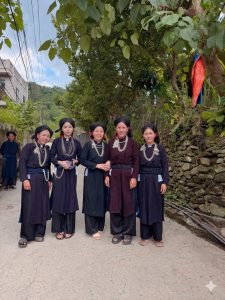
Figure 1. Traditional Attire of La Chí Women
The distinctive color of the La Chí traditional costume makes it easily recognizable amid the vibrant array of colors found at highland market gatherings.
Compared with many other ethnic groups, the traditional attire of the La Chí is relatively simple and unadorned. In the La Chí language, the word Pu means “shirt” or “garment,” similar to the Cao Lan term Pu dăn dinh for a traditional robe. This term is believed to originate from the Tai–Kadai (Tày–Thái) language family. Traditionally, La Chí men wear long robes extending to the calves. The robe has five panels, long sleeves, buttons fastened under the right arm, and a decorative embroidered seam along the front opening. The inner flap is shorter, reaching only to the chest. This long robe represents the traditional form of men’s clothing.
Today, the traditional robe has been adapted into a shorter version that extends only to the thighs. This modified style is especially popular among younger men, teachers, and local government officials of La Chí ethnicity. Men continue to wear wide-legged trousers with each leg measuring approximately 30–35 cm in width. An interesting linguistic feature is that the La Chí word for trousers, quen or quanh, closely resembles the Pu Péo term quân and shares a striking similarity with the Vietnamese word quần. Whether this resemblance reflects a common linguistic origin or results from long-standing cultural interaction remains an intriguing question.
La Chí men traditionally wear their hair long, extending beyond the shoulders. They commonly wrap or fold a headscarf around their hair to keep it in place, while hats are seldom used. A small indigo cloth bag with a red fabric border—except for the flap—measuring approximately 27 × 22 cm is usually carried at the waist to hold matches, tobacco, and other personal belongings.
The traditional appearance of La Chí men, characterized by the long robe, wrapped headscarf, the Tai-derived term for the robe, and the Vietnamese-derived word for trousers, evokes the historical attire once commonly worn by Vietnamese, Tày, and La Chí men. This suggests that, in the past, the traditional clothing of these ethnic groups shared many similarities.
Figure 2. Traditional Costumes of La Chí Men and Women
La Chí women traditionally wear trousers, although a small number still wear skirts similar to those of the Tày people. Following the general pattern observed in the evolution of women’s clothing among the Vietnamese and the Tày, the transformation of La Chí women’s attire appears to have progressed from skirts to trousers. While this transition occurred among the Vietnamese around the eighteenth and nineteenth centuries, it took place much later among the Tày and the La Chí, extending for nearly another century. Consequently, the few women who continue to wear skirts preserve an ancient cultural tradition, whereas the practice of wearing trousers has gradually become the dominant custom after a long period of cultural change.
The most distinctive element of La Chí women’s traditional attire is the long outer garment. Known as the pu, this four-panel robe is split down the front without buttons. When worn, the left front panel, decorated with a colored fabric trim, is folded across to the right side and secured with a cloth sash instead of silver buttons. The collar is carefully embroidered with colorful fabric and intricate needlework. During festivals and major ceremonies, women often wear three long robes layered together. The tailoring of this garment closely resembles the pu dăng dinh robe of the Cao Lan–Sán Chỉ people and also bears similarities to the traditional robes once worn by Vietnamese women in the ancient royal capital.
Accompanying the long front-opening robe is either an inner blouse, similar to that worn by Thai women, or a traditional bodice (yếm), as found among the Vietnamese, Mường, Cao Lan–Sán Chỉ, and La Chí peoples. Together, the front-opening robe and the embroidered bodice form a harmonious and unified costume, since the bodice would not be visible beneath garments fastened under the arm or buttoned at the center.
The La Chí bodice is made from a square piece of white fabric measuring approximately 37–40 cm on each side. The upper corner is cut to form a neckline and attached to two ties fastened behind the neck, while two additional ties at the side corners are secured behind the back, similar to the traditional bodices of the Vietnamese and Mường peoples. Unlike the plain white bodice of Mường women, which is largely concealed beneath the richly decorated waistband of the skirt, the La Chí bodice serves as a focal point of decoration. Its ornamentation includes parallel fabric bands across the upper section, four parallel zigzag embroidery lines in colored thread that intersect in pairs, and stylized floral motifs. Visible between the lapels of the outer robe, these embroidered patterns contribute to the simple yet elegant appearance of the La Chí women’s costume.
Instead of wearing conical hats, La Chí women traditionally wear headscarves. Whereas Vietnamese women commonly use square scarves, La Chí women prefer long scarves known as kha la. Similar in style to the piêu scarf of the Thai people, the kha la measures approximately 2.85 meters in length and 0.33 meters in width. Both ends are embroidered with colored threads – typically white or blue – and decorated with stylized floral motifs composed of four triangles, each half embroidered with different colored threads. Unlike the Thai style of wrapping the piêu, the La Chí scarf is tied behind the neck, allowing the embroidered ends to hang gracefully down to the waist.
La Chí women traditionally wear earrings and bracelets, whereas men generally wear only bracelets and do not wear necklaces, unlike the H’Mông. Children wear clothing similar to that of adults, although such attire is not particularly suitable for young children and often gives them a more mature appearance.
Shamans wear ceremonial garments that differ from everyday clothing when conducting rituals. Their ritual attire consists of a long robe extending below the calves, split down the front and secured with a cloth belt. They also wear a wide cloth hat with chin straps. During certain ceremonies, such as rituals related to upland rice cultivation, the officiant may wear a hat or attach a small piece of dried buffalo hide (approximately 20–30 cm wide) to the back. Hats are not traditionally considered a standard component of La Chí attire. A similar practice is also found among the Pu Péo people, whose ritual specialists wear hats adorned with a small bamboo star measuring approximately 6–7 cm in diameter during outdoor ceremonies. This similarity may reflect historical and cultural connections between the La Chí and Pu Péo communities.
Betel chewing and tooth blackening are long-established customs widely practiced throughout Southeast Asia, including among the Vietnamese and several ethnic minority groups in Vietnam. Historically, in resisting the forced assimilation policies of imperial China, the Vietnamese people preserved distinctive cultural practices, expressing their determination through the saying: “Fight to keep our long hair; fight to keep our blackened teeth.” At that time, blackened teeth represented an important cultural marker distinguishing the civilizations of the South and the North. The custom remained common among the Vietnamese lowland population until only a few decades ago. Today, the La Chí people continue to preserve the tradition of tooth blackening, primarily as an expression of aesthetic beauty and cultural identity.
Figure 3. Ritual Attire of a La Chí Shaman
There are various methods of blackening teeth, with different ethnic groups using different natural materials. For example, the Xinh Mun people use a substance extracted from tree resin, whereas the La Chí blacken their teeth (ton nhĩ) using leaves. The process begins by chewing the leaves of the nhấn tế vine – a climbing plant similar to wild betel – and holding the chewed leaves in the mouth for a period of time. Repeating this procedure two or three times a day gradually turns the teeth yellow. Next, the leaves of the mía phe plant, which have a bitter and pungent taste, are thoroughly chewed and held in the mouth. After repeated applications, the teeth gradually become black. To maintain the deep black color, both types of leaves are chewed once a week.
An important step in the process is thoroughly cleaning the teeth beforehand so that the natural dye can adhere more effectively. According to La Chí aesthetic beliefs, the darker the teeth, the more beautiful they are considered.
Similar to the Nùng and Dao peoples, though to a lesser extent, La Chí youth also decorate their teeth with gold coverings. This practice is regarded as a form of personal adornment and an expression of maturity. In the past, the customs of gold-capping or blackening teeth were so widespread that they gave rise to ethnonyms such as Hắc Xỉ (“Black-Teeth People”) and Kim Xỉ (“Gold-Teeth People”). In the eighteenth century, the scholar Lê Quý Đôn also recorded the presence of the “Gold-Teeth People” in Tuyên Quang. These ethnonyms, however, were generic designations rather than references to specific ethnic groups, as the practices of tooth blackening and gold-capping were shared cultural traditions among several ethnic communities in the northern mountainous regions of Vietnam.
Among the La Chí, customs also vary by locality. Communities in Bản Phùng and Nàn Xin do not traditionally practice betel chewing, whereas in Bản Pắng and Bản Díu, chewing betel remains a common cultural practice.
Source: Nguyễn Văn Huy. Traditional Culture of the La Chí People. Hanoi: Writers’ Association Publishing House.


Leave a Reply