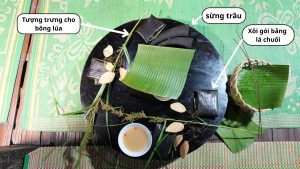
Theo phong tục truyền thống của người La Chí, họ chỉ thờ cúng những người đã mất tính từ 3 đời trở lại, những linh hồn này sẽ được mời về khi cúng tại nhà trưởng tộc của các dòng họ. Các gia đình tập trung tại nhà trưởng tộc, khi đi mang theo một chai rượu, một gói xôi, một miếng thịt. Các thành viên mặc quần áo truyền thống của dân tộc mình, những người được trưởng tộc chỉ định sẽ ngồi xung quanh một mâm gỗ có các giỏ đựng, gói xôi, gói thịt. Họ giúp trưởng tộc cúng gọi hồn những người trong họ đã mất về ăn tết. Riêng đối với trưởng tộc khi chưa cúng có thể mặc quần áo truyền thống và vấn khăn, nhưng khi bước vào cúng thì phải bỏ khăn ra, có như vậy bài cúng mới linh nghiệm. Người giúp việc cho trưởng họ sẽ chuẩn bị các “Đoọc Khâu” đây là một cành cây hoa trắng mọc hoang ở các sườn đồi, tháng 7 khi cây lúa lên xanh thì loài cây này cũng nở hoa, cành hoa được bó cùng với một vài lá cỏ dài to bản. Mỗi người giúp việc cho trưởng tộc sẽ cầm một “Đoọc Khâu” để xua đuổi tà ma, làm cho cây lúa tốt tươi không bị sâu bọ cắn phá. Con vật cúng là một con gà trống, tiết gà sau khi cắt được đặt ở trên mâm, gà được mang ra ngoài nhúng nước nóng, vặt lông sạch rồi đem vào đặt lên mâm gỗ để cúng tiếp. Sau đó gà được treo ở vách tường. Kế tiếp, trưởng họ buộc củ gừng vào sợi chỉ cầm bên tay phải, tay trái cầm sừng trâu, bên trong đựng rượu hoẵng, miệng đọc bài cúng ba đời. Trưởng tộc sẽ mời các linh hồn là nam giới trước tiên, các linh hồn này về sẽ nhập vào những người phụ giúp việc cho trưởng tộc. Khi các linh hồn đã về đông đủ thì trưởng họ và các linh hồn hiện thân vào những người giúp việc cùng ăn xôi, uống rượu hoẵng, uống nước cà đắng. Nước cà đắng theo quan niệm của người La Chí có tác dụng giúp xua đuổi những tà ma bám theo linh hồn người chết khi quay về nhà, nhờ uống nước này mà tà ma không vào được nhà và không quấy rối linh hồn và người sống trong những ngày tết. Các linh hồn nam giới được ăn thịt trâu, thịt lợn muối chua, riêng thịt trâu dùng để cúng có thể xào không cho thêm gì, hoặc xào gừng nhưng không được cho rau thơm vì theo quan niệm âm dương của người La Chí rau thơm không tốt khi xào cùng thịt trâu. Người xào thịt trâu không được nếm trước nếu không sẽ bị coi là phạm thượng, bị tổ tiên trách phạt.
Hình 1: Mâm lễ cúng
Trưởng họ thông báo cho các linh hồn nam giới: “Hãy ở lại ăn tết cùng con cháu, phù hộ cho con cháu sức khoẻ, làm ăn may mắn, cây cối tươi tốt, mùa màng bội thu”.
Khi các linh hồn nam giới được mời về đầy đủ, trưởng họ dùng củ gừng và sừng trâu chứa rượu, miệng đọc bài cúng đọc tên mời từng linh hồn nữ giới trong dòng tộc về, và các linh hồn này cũng sẽ nhập vào những người nam giới giúp việc cho trưởng họ. Trưởng họ lại mời các linh hồn uống nước cà đắng và ăn thịt trâu, ăn xôi, uống rượu hoẵng. Trưởng họ căn dặn các linh hồn phù hộ cho dòng họ ngày càng cường thịnh. Sau bài cúng này, thủ tục cúng kết thúc, chiêng trống nổi lên. Tuy nhiên, một số họ tộc nay không còn thực hiện nghi thức đánh chiêng trống nữa.
Kết thúc lễ cúng mọi người chuẩn bị mâm, bát, rượu, thịt cùng ăn uống chúc tụng nhau, đến tối mới về nhà. Sau buổi cúng này, các gia đình trong họ mới được phép làm cỗ mời họ hàng đến ăn, bắt đầu từ gia đình người em út, cứ thế tiếp diễn theo thứ tự lớn dần và cuối cùng là nhà anh cả. Tuy nhiên, nhà người em út phải có con thì mới làm nếu không thì có thể bỏ qua, đây là phong tục được truyền qua nhiều thế hệ nhưng không ai biết chính xác tại sao lại bắt đầu từ nhà em út trước.
(Trích: Lí lịch Tết Khu Cù Tê)
✨ Hãy kéo xuống để khám phá bài viết bằng tiếng Anh nhé! (Scroll down to explore the English version!)
According to the traditional customs of the La Chí people, only ancestors within the most recent three generations are worshipped. During the clan ritual, these ancestral spirits are invited to return at the house of the clan head. Family members gather at the clan head’s home, each bringing a bottle of rice wine, a parcel of sticky rice, and a portion of meat as offerings. Participants wear their traditional ethnic costumes, while those appointed by the clan head sit around a wooden tray containing baskets of sticky rice and meat offerings. They assist the clan head in performing the ritual to invite the spirits of deceased clan members to return and celebrate the New Year.
Before the ceremony begins, the clan head may wear traditional attire together with a headscarf. However, once the ritual officially starts, the headscarf must be removed, as the La Chí believe that only then can the prayers become spiritually effective. The assistants prepare Đoọc Khâu, a wild flowering branch with white blossoms that grows naturally on hillsides. The plant blooms in the seventh lunar month, coinciding with the period when rice plants turn green. Each flowering branch is tied together with several long, broad grass leaves. Every assistant holds a Đoọc Khâu branch to ward off evil spirits and pray for healthy rice crops protected from pests and diseases.
The sacrificial animal is a rooster. After it is slaughtered, the chicken’s blood is placed on the ritual tray. The rooster is then taken outside, scalded in hot water, thoroughly plucked, and returned to the wooden tray for the continuation of the ceremony. Afterward, it is hung on the wall. The clan head then ties a piece of ginger to a string held in the right hand while holding a buffalo horn filled with rượu hoẵng (traditional rice wine) in the left hand and recites prayers dedicated to the ancestors of the past three generations.
The ritual first invites the spirits of deceased male ancestors. According to La Chí belief, these spirits temporarily enter the bodies of the ritual assistants. Once all the ancestral spirits have arrived, the clan head and the spirit-possessed assistants share sticky rice, drink rượu hoẵng, and consume bitter eggplant water. The La Chí believe that bitter eggplant water drives away evil spirits that may accompany the returning souls of the deceased. By drinking it, malicious spirits are prevented from entering the house or disturbing either the ancestral spirits or the living during the New Year celebration.
The male ancestral spirits are offered buffalo meat and fermented salted pork. Buffalo meat prepared for the ritual may either be stir-fried without seasoning or cooked only with ginger; aromatic herbs must not be added because, according to the La Chí concept of yin and yang, such herbs are considered inappropriate when cooked with buffalo meat. The person preparing the buffalo meat is strictly forbidden from tasting it beforehand, as doing so is regarded as an act of disrespect toward the ancestors and is believed to invite their punishment.

Figure 1. Ritual Offering Tray
The clan head announces to the spirits of the deceased male ancestors:“Remain here to celebrate the New Year with your descendants. Bless them with good health, prosperity, flourishing crops, and abundant harvests.”
After all the male ancestral spirits have been invited, the clan head continues the ritual by holding the piece of ginger and the buffalo horn filled with wine while reciting prayers that call each deceased female ancestor of the clan by name. According to La Chí belief, these female spirits also temporarily possess the male ritual assistants. The clan head then invites the ancestral spirits to drink bitter eggplant water, eat buffalo meat and sticky rice, and enjoy rượu hoẵng (traditional rice wine). Finally, the clan head prays for the continued prosperity and flourishing of the entire clan.
Upon the completion of these prayers, the ritual officially concludes, and the sound of gongs and drums traditionally marks the end of the ceremony. However, some clans today no longer perform this gong-and-drum ritual.
After the ceremony, family members prepare food, bowls, wine, and meat to share a communal feast, offering one another New Year greetings and well wishes before returning home in the evening. Only after this clan ritual has concluded are individual households permitted to host feasts for relatives. The sequence begins with the youngest brother’s family and continues in ascending order of seniority, ending with the eldest brother’s household. However, the youngest brother’s family may only host the feast if they have children; otherwise, the sequence may skip directly to the next household. This custom has been passed down through many generations, although no one can clearly explain why the celebrations traditionally begin with the youngest brother’s family.
(Source: Dossier of the Khu Cù Tê Ritual)

nongthuy032005@gmail.com
DI SẢN VĂN HÓA PHI VẬT THỂ QUỐC GIA


Để lại một bình luận